Project sponsored by the Maryland Society of the Sons of the American Revolution

Recent posts: Finding the Maryland 400
“In no sort fit for the Service”: PTSD and the Maryland 400
Francis Osborn was a private in the Second Company when he fought at the Battle of Brooklyn in August 1776. Although his company lost only three men at the battle, Osborn’s experiences that day left their mark on him. When he was called for militia duty a few years later, he was exempted “appearing to […]
250 Years Ago in Brooklyn, New York…
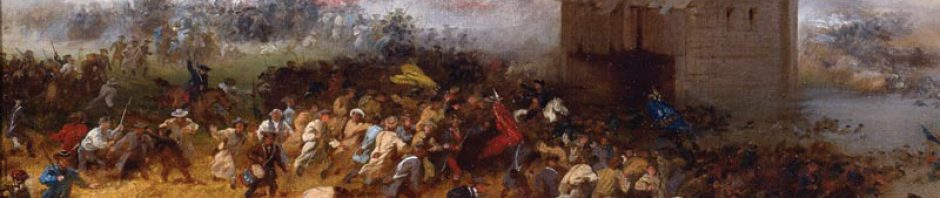
…the Maryland 400 made a desperate last stand that held back the British and helped save the American army. The Battle of Brooklyn, fought on August 27, 1776, was the first major battle of the Revolutionary War, and a terrible defeat for the Americans.The British overwhelmed the Continental Army commanded by George Washington. As the […]
Maryland 400 Podcast, Episode Three: The Meaning of the Maryland 400
This is the final episode of the Maryland 400 podcast, exploring Maryland and the American Revolution, from journalism professor Tom Moore of CUNY York College. The series concludes by discussing the meaning of the Maryland 400. Who were these soldiers, and what did they do? What can be learned about them? It features Assistant State […]
Maryland 400 Podcast, Episode 2: Maryland’s Black Patriots
This is episode two of the Maryland 400 podcast, exploring Maryland and the American Revolution, from journalism professor Tom Moore of CUNY York College. This week’s episode focuses on Maryland’s Black soldiers, who are often overlooked but were a critical part of the Continental Army. Maryland enlisted Black soldiers as early as the summer of […]
Archives
-
Join 275 other subscribers
Tag Archives: Maryland
The political climate of Baltimore in 1776
Baltimore Town was more than a diverse and pre-industrial port town that sat on the Patapsco River. It had numerous sentiments, ranging from the pro-revolutionary, some of which were militant in their beliefs, to support for the British Crown. This article continues the series … Continue reading
A “dull place” on the Patapsco: Baltimore and the Marr Brothers
In May 1776, the Revolution had been raging for almost a year with skirmishes between the British imperial army and the rag-tag revolutionaries. William Marr, probably with his brothers Nicholas and James, enlisted in the Continental Army in Capt. Nathaniel Ramsey’s … Continue reading
Battle of Brooklyn Roll of Honor
On August 27, 1776, after a week of anticipation, and hours of marching, the Continental Army fought the British at the Battle of Brooklyn, the first large-scale battle of the Revolutionary War. All told, the Americans lost about 300 killed, … Continue reading
Men who “could stand cutting”: The Old Maryland Line
The famed Maryland 400 were not the only Revolutionary War soldiers hailed as heroes. Indeed, throughout the war, the Maryland Line (as the state’s contribution to the Continental Army was called) developed a reputation for skill and bravery. They were … Continue reading
Maryland’s African American Troops
Earlier, we introduced the topic of Black Revolutionary War soldiers, but left unanswered the question of whether any fought as part of the Maryland 400. While a number of African Americans fought as part of the Maryland Line later in … Continue reading
African Americans in the Revolutionary War
In October, Congress gave preliminary approval to a monument on the National Mall to African American Revolutionary War soldiers. While much work remains to be done before a monument is actually constructed, this was an important step for the project, … Continue reading
Demographics in the First Maryland Regiment
A former member of the Fifth Company who fought at the Battle of Brooklyn, John Burgess was described as a slender, 42-year-old man, with light brown hair, a “swarthy” complexion, and a height of five feet eleven inches, who was … Continue reading
The Midnight Ride of Paul Revere
Listen my children and you shall hear Of the midnight ride of Paul Revere, On the Eighteenth of April, in Seventy-five; Hardly a man is now alive Who remembers that famous day and year. So wrote Henry Wadsworth Longfellow in … Continue reading
Introducing the Interactive Map
Geography physically connects us to the past in a way that can dust the cobwebs off of history and make it more accessible to the modern world. This interactive map shows where Smallwood’s men came from and the places where … Continue reading


