A “little groggy”: the deputy sheriff of Baltimore and his “bowl of toddy”

Photographs of a hot toddy

Photograph of two hot toddy drinks

On December 21, 1776, Sergeant John Hardman of the Edward Veazey‘s Seventh Independent Company arrived at a public prison in Baltimore Town with captured British soldiers. [1] He was there escorting the British prisoners from Philadelphia. That night, Hardman ordered a “bowl of toddy” for the prisoners. Toddy, a popular drink originally adopted by the British, consisted of rum, hot water, and sugar.

Two other men, Daniel Curtis, the Baltimore County Sheriff, and John Ross, his deputy, asked for a “bowl of liquor.” [2] Ross, also a keeper of the town’s poor house, engaged in a friendly conversation with the prisoners, amongst whom Hardman was sitting. [3]

What happened next made people uneasy. Continue reading

Posted in Baltimore, Maryland 400, slaveowners | Tagged , , , , , , , , , , , , , , , , , , , , | Comments Off on A “little groggy”: the deputy sheriff of Baltimore and his “bowl of toddy”

Victory at Yorktown!

On October 19, 1781, British General Charles, Lord Conwallis surrendered his army of more than 8,000 men to George Washington at Yorktown, Virginia. Cornwallis’s action brought an end to a siege which had lasted nearly two weeks.  It was also the end of major combat in the American Revolution.

Although soldiers from Maryland fought at nearly all major battles of the war, often playing pivotal roles in combat, none took part in the Battle of Yorktown. The Third and Fourth Maryland Regiments were in the Yorktown area, but apparently took no part in the fighting.  The greatest contribution to the victory at Yorktown that the Marylanders made was in keeping a contingent of British reinforcements bottled up in South Carolina, unable to reach Cornwallis. It was probably just as well, since the Maryland Line had been reduced to a small fragment of its original strength. [1] Continue reading

Posted in Maryland 400 | Tagged , , , , , , | 4 Comments

Sickened Marylanders and the Philadelphia Bettering House

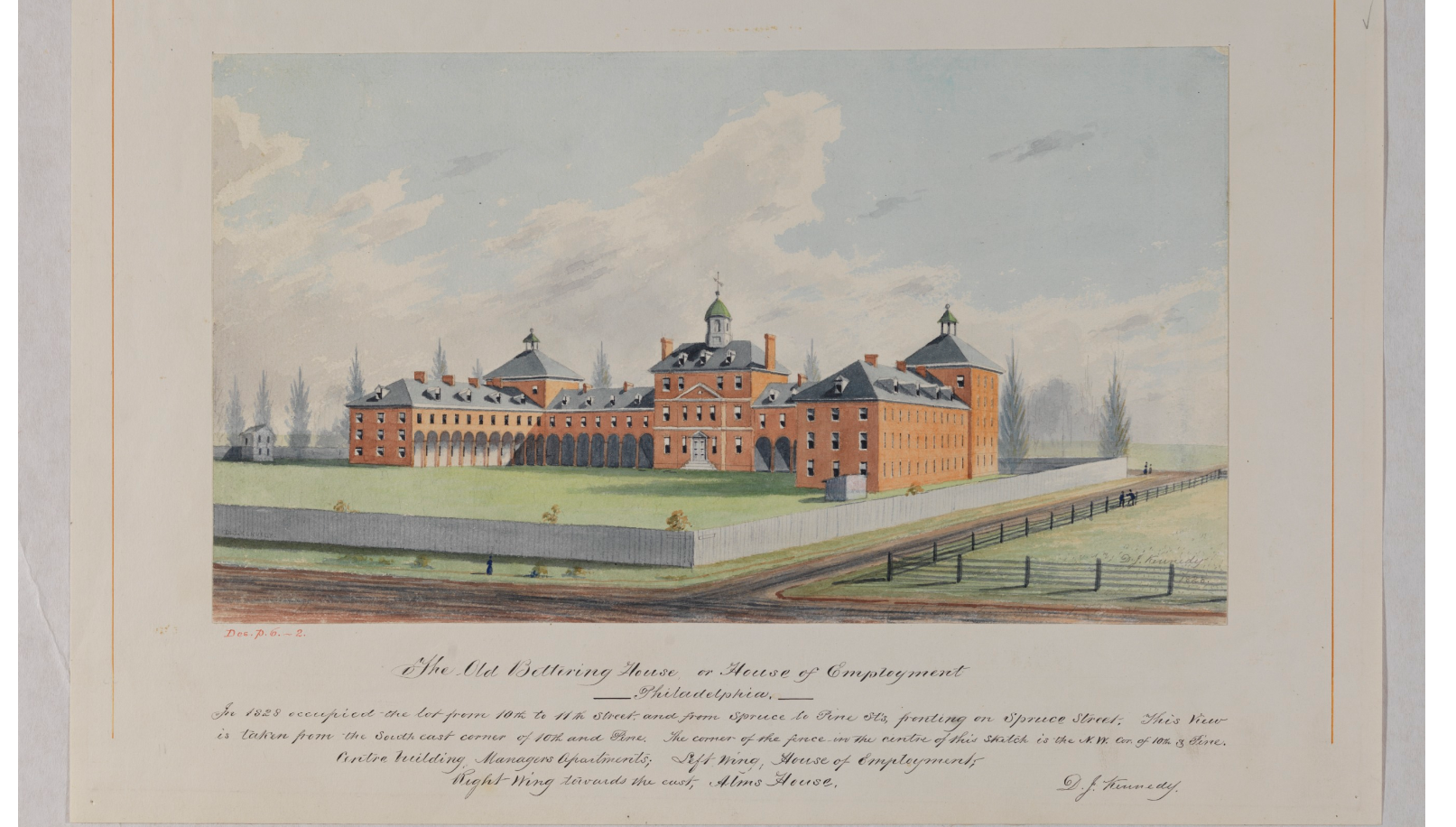
An illustration of the Philadelphia Bettering House in 1828, courtesy of the Historical Society of Pennsylvania.

An illustration of the Philadelphia Bettering House in 1828, courtesy of the Historical Society of Pennsylvania, which is likely what it looked like in 1776 and 1777 as well.

On April 13, 1777, John Adams described the spread of disease in Philadelphia and the fate of the sick soldiers in that city in a letter to his wife, Abigail Smith. In his letter, he mentioned a local institution, called the Philadelphia Bettering House. He told her that

“I have spent an Hour, this Morning, in the Congregation of the dead. I took a Walk into the Potters Field, a burying Ground between the new stone Prison, and the Hospital, and I never in my whole Life was affected with so much Melancholly. The Graves of the soldiers, who have been buryed, in this Ground, from the Hospital and bettering House, during the Course of the last Summer, Fall, and Winter, dead of the small Pox, and Camp Diseases, are enough to make the Heart of stone to melt away. The Sexton told me, that upwards of two Thousand soldiers had been buried there…To what Causes this Plague is to be attributed I dont know….Disease has destroyed Ten Men for Us, where the Sword of the Enemy has killed one.” [1]

Continue reading

Posted in Baltimore, Maryland 400 | Tagged , , , , , , , , , , , , , , , , , , | 5 Comments

“The misfortune which ensued”: The defeat at Germantown

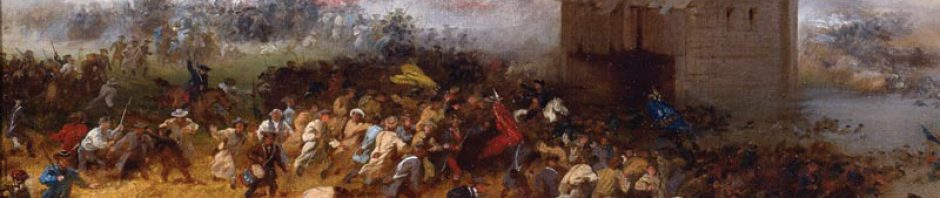
Saverio Xavier della Gatta, an eighteenth-century Neopolitan painter, painted this scene of the Battle of Germantown in 1782, possibly for a British officer. Courtesy of the Museum of the American Revolution.

On the morning of October 4, 1777, Continental troops encountered British forces, led by Lord William Howe, encamped at Germantown, Pennsylvania, in Philadelphia’s outskirts. George Washington believed that he had surprise on his side. [1] He had ordered his multiple divisions to march twenty miles from their camp at Perkeomen, with some of the soldiers having neither food or blankets. [2] Washington thought that if the British were defeated he could retake the Continental capital of Philadelphia and reverse his disaster at Brandywine.

Among the men who marched with Washington were 210 Marylanders, including many veterans of the Maryland 400. [3] The seven Maryland regiments, commanded by General John Sullivan, were at the lead of the Continental attack. After marching most of the night, like the rest of the Continental Army, they arrived at Chestnut Hill, three miles from Mount Airy, and encountered a British picket. [4] Later, Sullivan’s division advanced and fought British light infantry in a 15-20 minute clash in an orchard. Continue reading

Posted in battles, Maryland 400 | Tagged , , , , , , , , , , , , | 6 Comments

“Flecking the hedges with red”: Palmer’s Ballad on the Maryland 400

palmer-photo-150x150

A photograph of John Williamson Palmer who wrote ‘The Maryland Battalion’

In the past, we have written about poems and songs relating to the Maryland 400. [1] They were celebrated years after and during the Revolutionary War, with newspapers often containing poems and songs. Such poems included one about William Sterrett in 1776 and a song by Tom Wisner titled “The Old Line.” Poems and ballads, which are narrative poems, not only appeared in newspapers but also in books. This post analyzes the 1901 ballad titled “The Maryland Battalion in the Battle of Long Island” and its author. [2] Continue reading

Posted in Maryland 400, poems | Tagged , , , , , , , , , , , , , , , | Comments Off on “Flecking the hedges with red”: Palmer’s Ballad on the Maryland 400

Which Private Smith is the Right Private Smith?

Piecing together service records of Revolutionary War soldiers can be complicated. No one got a DD 214 when they were mustered out. Many soldiers had their service records compiled by the Federal Government in the late nineteenth century, and applications for Federal veteran’s pensions usually include a (mostly) thorough record of service. Unfortunately, the compiled service records often omit early 1776 service–most of what we need–and not all men applied for pensions.

The rest of the time, as a result, figuring out a Revolutionary War soldier’s military career means paging through books, letters, and other records, trying to find information about his service. This is especially tricky when there is more than one soldier with the same name. In many such cases, it is simply impossible to differentiate the men. There were at least seven John Smiths who enlisted in the First Maryland Regiment in 1776, for example, and well more than that over the rest of the war. There were no Social Security Numbers, street addresses, or phone numbers in the eighteenth century to help differentiate people easily. Continue reading

Posted in Biographies, Maryland 400 | Tagged , , , , , , , , , , | 1 Comment

British “masters of the field”: The disaster at Brandywine

brandywine

Illustration of the Battle of Brandywine, drawn by cartographer, engraver and illustrator Johann Martin Will (1727-1806) in 1777. Image is courtesy of the Library of Congress.

On the night of September 10, 1777, many of the soldiers and commanding officers of the Continental Army sat around their campfires and listened to an ominous sermon that would predict the events of the following day. Chaplain Jeremias (or Joab) Trout declared that God was on their side and that

“we have met this evening perhaps for the last time…alike we have endured the cold and hunger, the contumely of the internal foe and the courage of foreign oppression…the sunlight…tomorrow…will glimmer on scenes of blood…Tomorrow morning we will go forth to battle…Many of us may fall tomorrow.” [1]

The following day, the Continentals would be badly defeated by the British and scenes of blood” would indeed appear on the ground near Brandywine Creek. Continue reading

Posted in battles, Maryland 400 | Tagged , , , , , , , , , , | 1 Comment

Another Company Finished!

We are very pleased to announce that we have written biographies of all the soldiers in the Fourth Company of the First Maryland Regiment! There are 71 biographies of Fourth Company soldiers, which make up an important part of the more than 200 now online. You can read all of them on our Biographies page.

The Fourth Company was at the heart of the Maryland 400’s last stand at the Battle of Brooklyn, and suffered the worst losses of the Maryland companies. Only 14 men escaped capture or death: one sergeant, 12 privates, and the company’s drummer. Continue reading

Posted in Maryland 400 | Tagged | Comments Off on Another Company Finished!

Persecuted in Revolutionary Baltimore: The Sufferings of Quakers

quaker lady detaining the english general

“Quaker Lady detaining the English General.” This engraving refers to Mary Lindley Murray who, as legend has it, delayed Sir Henry Clinton and his officers by treating them to food and drink, tempting them with her charms, while the Americans under the command of Israel Putnam escaped after the disastrous Battle of Kip’s Bay in September 1776. This cartoon counters the feelings of some revolutionaries by making Quakers seem favorable to the revolutionary cause.

In March 1777, revolutionary leader John Adams wrote an angry letter to his wife, Abigail. He declared that Baltimore was a “dull place” where many of the town’s remaining inhabitants were Quakers, who he described as “dull as Beetles” and a “kind of neutral Tribe, or the Race of the insipids.” [1] This article continues the series about Baltimore Town by focusing on the Baltimorean Quakers, also called the Society of Friends. These Quakers were living in a town where religious beliefs interlinked with political events. You can read our other posts about Baltimore during the Revolutionary War period here.

Adams clearly misrepresented the role of Quakers in Baltimore Town. [2] The Quakers were controversial in the public arena because of their dedication to pacifism resulting in refusal to pay war taxes, assert loyalty to the colonies, or lend supplies to the Continental Army. Continue reading

Posted in Baltimore, Maryland 400 | Tagged , , , , , , , , , | 2 Comments

The 240th Anniversary of the Battle of Brooklyn

Late on the night of August 26, 1776, the First Maryland Regiment and the rest of the Continental Army began to cross the East River from Manhattan to Long Island. Awaiting them were some 20,000 British and Hessian soldiers.

Earlier that day, Captain Daniel Bowie had written out his will, describing what should happen “If I fall on the field of battle.” Bowie was 20 or 21, commanding a company he had joined only seven weeks earlier.

The Marylanders marched all night, until they encountered the British around sunrise. As they prepared for combat to begin, Lieutenant Joseph Butler,  was moved to consider what fate could hold for him. According to Lieutenant Joseph Ford,

[On] August 27, 1776, when Colonel Smallwood’s Regiment was drawn up on Long Island in expectation to engage with the enemy, Lieut. Joseph Butler called Ensign [sic: Lieutenant] Prall and myself out of the ranks, and desired we remember if he should be so unfortunate as to be killed that it was his desire that his brother or half brother should have his estate…He signified at the time that he did not know where his brother was, or whether he would ever apply [as beneficiary of the estate], as he had not heard from him for some time, and if he should not apply, that Miss Sarah Hall should be possessed of the whole estate…

Later that day, the Continental Army would be swept from the field in defeat. Bowie, Butler, and many other Marylanders would lie dead or dying. Word of the heroism of the Maryland 400, who sacrificed so many lives to save the American Army, was already spreading. But on August 26, all that lay in the future. Continue reading

Posted in Maryland 400 | Tagged , , , | 1 Comment