The political climate of Baltimore in 1776

An illustration from 1777 drawn by British printmaker Matthew Darly. It is captioned: “Poor old England endeavoring to reclaim his American children and therefore is England marred and forced to go with a staff.” Courtesy of the Library of Congress.

Baltimore Town was more than a diverse and pre-industrial port town that sat on the Patapsco River. It had numerous sentiments, ranging from the pro-revolutionary, some of which were militant in their beliefs, to support for the British Crown. This article continues the series about Baltimore Town by focusing on the town’s political climate in 1776. You can read our other posts about Baltimore during the Revolutionary War period here. Continue reading
Posted in Baltimore, Maryland 400 | Tagged , , , , , , , , , , , , , , | Comments Off on The political climate of Baltimore in 1776

“Games of Exercise” During the American Revolution

With the Olympics in full swing, this is a good time to talk about the athletic pastimes of American soldiers during the Revolutionary War. Active campaigning took a relatively small part of the year during the American Revolution, and as a result armies had a considerable amount of downtime in camp. Since the military was made up largely of men in their 20s, sports and games were a fixture of camp life.

As is usually the case, we know the most about the leisure activities of the officer corps, and most of the sports discussed here were documented as being played by officers. It is not clear if that’s because the officers only wrote about the games they played among themselves and ignored what their subordinates did, or because the enlisted men had their own, different games. Continue reading

Posted in Maryland 400 | Tagged , , , , , , , , , | Comments Off on “Games of Exercise” During the American Revolution

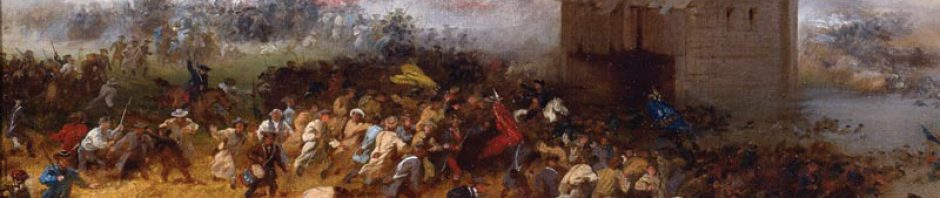
A Short Fight on Hobkirk’s Hill: Surprise, Blame, and Defeat

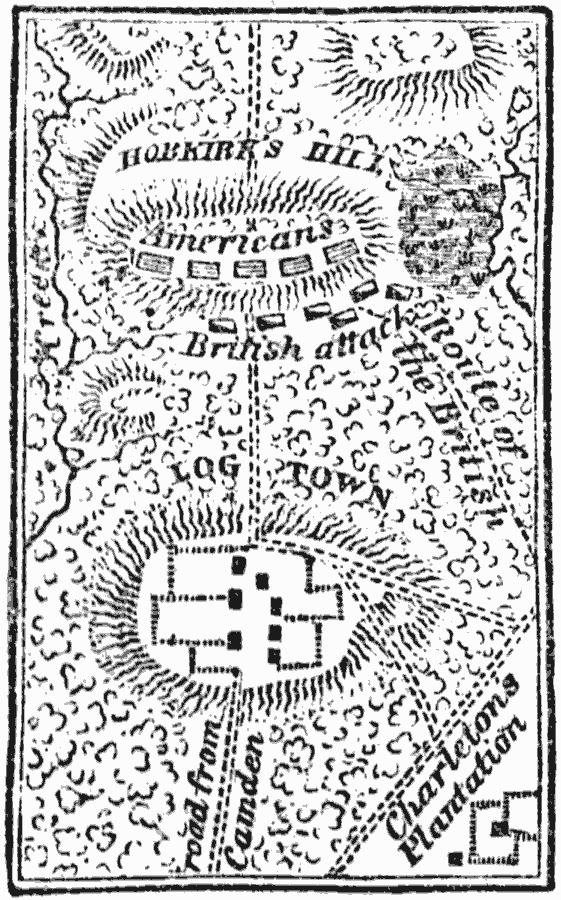
A map showing the Battle of Hobkirk's Hill, courtesy of the University of South Florida

A map showing the Battle of Hobkirk’s Hill, courtesy of the University of South Florida

At 10 or 11 o’clock in the morning of April 25, 1781, one and half miles from Camden, South Carolina, British troops advanced on Continental Army soldiers, commanded by Major General Nathaniel Greene, who were having their breakfast. The Continentals, camped on a low, but “strong and difficult,” ridge named Hobkirk’s Hill, which extended for about one thousand yards, surrounded by thick woods, and a swamp on the East, were taken by surprise. [1] The British, commanded by Lord Rawdon, had known of Greene’s movements, possibly from a deserter, or from Continentals captured during skirmishes before the battle. [2] Every person in Rawdon’s army, including drummers, was armed with a flintlock gun, including 60 dragoons, and in broad daylight, they marched, led by Irish volunteers, through the swamp and woods undetected, and reached the front of Continental lines. [3] What one North Carolina rifleman, named John Mooney, called a “short fight with…Lord Rawdon at Camden” ensued. [4]

General Greene described that the Continental Army was waiting on the hill for reinforcements, since they did not see it as practicable to storm the town. [5] Advanced regiments of his army were fired upon, with a defensive line Continue reading

Posted in battles, Maryland 400 | Tagged , , , , , , , , , , , , | 2 Comments

“Anxious of showing my zeal for the love of my Country, I entered myself as a Cadet…”

When Maryland put together its regiment as directed by the Continental Congress in 1776, it needed officers to command the troops. The regiment had nine companies, as well as seven independent companies. Each company had a captain and three lieutenants, totaling 64 officers. While that may seem like a large number of officers (it does not even include the officers Maryland provided to the Flying Camp), there were more men wanting to become an officer than the number of officer commissions available. In addition to their captain and lieutenants, some companies also had cadets.

Cadets were young members of the gentry who did not receive commissions as officers and so remained with the army as officers-in-waiting, hoping that officer positions would become available. As they waited, cadets lobbied for commissions Continue reading

Posted in Maryland 400 | Tagged , , , , , , , | 2 Comments

Project update: A Company Completed!

We are very pleased to be able to announce that we have written biographies of all the known soldiers of the Fifth Company! This is an important step towards the goal of the project: writing biographies of all the Marylanders who fought at the Battle of Brooklyn (900 men, in twelve companies). We first focused on the Fifth Company in 2014, beginning with this blog post. Continue reading

Posted in Maryland 400 | 1 Comment

A “dull place” on the Patapsco: Baltimore and the Marr Brothers

bmorezoomedin

In 1776, Baltimore’s population was just over 6,000. This zoomed-in version of a map, courtesy of the Library of Congress, shows how Baltimore was portrayed in 1776.

In May 1776, the Revolution had been raging for almost a year with skirmishes between the British imperial army and the rag-tag revolutionaries. William Marr, probably with his brothers Nicholas and James, enlisted in the Continental Army in Capt. Nathaniel Ramsey’s Fifth Company, a section of the First Maryland Regiment, at Whetstone Point. [1] It was not uncommon for multiple men of the same immediate family to enlist in the Revolutionary War. Many company members were young and residents from the Baltimore area. The Fifth Company included the Marr brothers at Whetstone Point, fortified with 38 cannons and earthworks, two miles below Baltimore, to defend it from British attack. [2] They were joined by Daniel Bowie’s Fourth Company and Samuel Smith’s Eighth Company, as we have noted on this blog in the past. The Marr brothers and members of the three companies of the First Maryland Regiment would have seen a Baltimore that few of us can imagine today. This article is the beginning of a series about Baltimore. Continue reading

Posted in Baltimore, Maryland 400, slaveowners | Tagged , , , , , , , , , , , , | 2 Comments

A Young Soldier Prepares to Leave for War

“Ordered, That colonel Smallwood immediately proceed with his battalion to the city of Philadelphia, and put himself under the continental officer commanding there,” wrote the Convention of Maryland, the state’s Revolutionary legislature, on July 6, 1776. The men of the First Maryland Regiment were to depart three days later.

The Convention’s order came amid rapid and dramatic developments in Maryland. The province’s governor, Robert Eden, had left Annapolis just a days earlier. A few hours before it ordered the troops were ordered to march, the Convention formally declared independence from Great Britain, and a few days later, news arrived from Philadelphia that Congress had done the same. Continue reading

Posted in Biographies, Maryland 400, wills | Tagged , , , , , , , , , , , , | 2 Comments

“He had never gave them an inch before he found that he had nothing left to keep them off with”

In late August 1777, the American Army planned a raid on Staten Island. Intelligence available to the Americans suggested that the British forces there were primarily American Loyalist militia rather than British regular troops. Furthermore, the inexperienced Tories were stealing food and supplies from the local residents. A raid presented the opportunity to generate local goodwill as well as disrupt British raiding along the New Jersey coast.

About one thousand men partook in the raid on August 22, which began well. Surprised Loyalists fled the advancing Americans, who helped themselves to the arms and equipment left behind. The day was full of surprises as the Americans soon ran into a regiment of British Regulars, who quickly retreated to their fortifications. Thinking they had won the day, the American raiders turned to raiding, ceasing to be an effective fighting force. Meanwhile the British regulars had regrouped and went on the offensive, causing a general American rout. Continue reading

Posted in Biographies, Maryland 400 | Tagged , , , , , , | Comments Off on “He had never gave them an inch before he found that he had nothing left to keep them off with”

Col. Gaither: Seven years on Georgia’s frontier

Map, courtesy of the Library of Congress, that shows Georgia's frontier in 1795.

Map, courtesy of the Library of Congress, that shows Georgia’s frontier in 1795.

A new biography expands on previous writing on this blog about Henry Chew Gaither, a Revolutionary War captain of the First and Fourth Maryland Regiments. On the eve of the Battle of Brooklyn, he served as a witness for Daniel Bowie’s will. Unlike most Revolutionary War veterans, Gaither remained in the military after the war, serving two years in Ohio [2], seven years on the Georgian frontier, and two years in the Mississippi Territory as a U.S. Army officer. [3] In August 1792, Gaither, 41 years old at the time, received nine pages of instructions for his service in Georgia from Secretary of War Henry Knox, telling him to obtain a “healthy” place for his troops, be cordial to the Spanish and Georgian governments, and avoid a “heated” incident with their governments. [4] Continue reading

Posted in Biographies, Maryland 400, slaveowners | Tagged , , , , , , , , , , | 7 Comments

A Common Soldier’s Inventory, and His Career

We recently posted about the extensive probate inventory of Henry Neale’s personal property, and how, running seven pages long, it can tell us a lot about its subject. Today, we have an inventory from another veteran of the First Maryland Regiment that is much smaller, but even more helpful.

Peter Burk enlisted in the Fourth Company in January 1776 as a private. His company took the highest casualties at the Battle of Brooklyn, losing 80 percent killed or captured. Burk wasn’t killed, but it is not known if he was taken prisoner. He eventually became a corporal and served until 1780. After the war, Continue reading

Posted in Biographies, Maryland 400 | Tagged , , , , , , , , , | 3 Comments