The British Diversion

The Marylanders were called to battle before sunrise on August 27, 1776. Lord Stirling, the temporary commander of the Maryland troops, was awoken at around three o’clock in the morning and given the news that the British had begun their advance. During the night, the British had surprised the American guard posted near the Red Lion Inn, and in the confusion, a number of Americans had been taken captive. General Israel Putnam ordered Stirling to take the two regiments “nearest at hand” and engage the British on the road near the Red Lion Inn. Continue reading

Posted in Maryland 400 | Tagged , | Comments Off on The British Diversion

The Marylanders Arrive

On August 26, 1776, the Marylanders arrived at Long Island on the eve of battle. Once it became clear that a major engagement was imminent, Washington sent the regiment to reinforce the American defensive line. The men who would become known as the Maryland 400 were posted on the Heights of Guana, a wooded, ten-mile ridge near the British encampment at the town of Flatbush. They joined with the force already there, which had fought a number of skirmishes with the British, and the small engagements served to boost the confidence of the inexperienced Continental soldiers. An intelligence report from New York mentioned the recent encounters with the British, “We have had only four men wounded since the enemy landed; but we are certain many of them [the British] fell.”

Read more…

Continue reading

Posted in Maryland 400 | Comments Off on The Marylanders Arrive

“They Must Be Well Watched”

After the British landed on Long Island they advanced to within three miles of the American lines, and then they stopped. On August 23, 1776, the tension grew in New York as the American leadership tried to determine the enemy’s next move. The standoff that began on August 22 reinforced the Americans’ belief that the British were using Long Island as a diversion, and the main attack would come to Manhattan.  General William Heath of Massachusetts captured the Continue reading

Posted in Maryland 400 | Tagged , | Comments Off on “They Must Be Well Watched”

The British Come Ashore

On August 22, 1776, the British began setting the stage for battle by landing troops on Long Island. The Continental Army had been present in varying numbers on Long Island for nearly four months, since General Nathanael Greene was ordered to encamp there on May 1, and with the arrival of additional Hessian troops to aid the British on August 25, only five days remained until the forces would finally clash at the Battle of Long Island on August 27.

Read more…

Posted in Maryland 400 | Tagged , | Comments Off on The British Come Ashore

In Their Own Words: An Oral History of the Battle of Brooklyn, Part II

This is Part II of our compilation of personal accounts of the Battle of Brooklyn by members of the First Maryland Regiment. If you missed Part I, you can read it here.

Around midday on August 27, 1776, the British troops who had been firing on the Marylanders pulled back. Major Mordecai Gist, the commander on the ground, judged that “Our men behaved well, and maintained their ground.” As the British withdrew, the Marylanders felt they had weathered their first test as soldiers. Continue reading

Posted in Maryland 400 | Tagged , , , , , , , , | 4 Comments

In Their Own Words: An Oral History of the Battle of Brooklyn

Next week marks the 238th anniversary of the Battle of Brooklyn. Beginning Friday, we will be provide updates of the battle as it unfolded.

In preparation for that, over the next two days, we are publishing a compilation of several personal accounts of the battle by members of the First Maryland Regiment. These accounts offer unique insight into the terrible defeat the American suffered, and the heroism of the Marylanders. This is the first part; part two will run tomorrow.


The Battle of Brooklyn (also called the Battle of Long Island) was fought on August 27, 1776. After being forced to withdraw from Boston in May, the British spent the summer preparing to push the Americans out of New York. By August, both sides had assembled large armies near the city, preparing for a battle they knew would happen soon. The Continental Army included about 1,000 Marylanders, few of whom had ever been in combat before, and most of them had seen only a handful of small skirmishes.

This is the story of that battle, as told by some of the Marylanders who fought in it.

William McMillan
Corporal, 4th Company, 20 years old

The British came to New York, and parts of our Regiment lay in Annapolis and parts in Baltimore. Hand bills was sent in every direction for volunteers and our Regiment turned [out] to a man that was fit to march. We had about twelve hundred men in the Regiment and we marched for New York, I believe we arrived there about the First of August 1776…On the evening of the 26 of August we left New York and landed on Long Island.

On the eve of the first full-scale battle of the American Revolution, General George Washington convened a court martial to try Lt. Col. Herman Zedwitz, who had been caught trying to sell American information to the enemy. Washington insisted that a number of high-ranking officers serve as the jury.

William Smallwood
Colonel, 1st Maryland Regiment, 44 years old

Lt. Col. [Francis] Ware and myself were detained on the Trial of Lt. Col. Zedwitz, and tho’ I waited on General Washington and urged the Necessity of attending our Troops, yet he refused to discharge us, alleging there was a Necessity for the trial…after our dismissal from the Court Martial it was too late to get over [to the battle].

With Smallwood and Ware hearing the case against Zedwitz, command of the Maryland troops fell to Major Mordecai Gist, a 33 year-old Baltimore merchant who had led revolutionary activities for several years, but like the Marylanders he now led, had never seen combat.

Mordecai Gist
Major, 1st Maryland Regiment, 33 years old

We began our march to the right [side of the battlefield], at three o’clock in the morning, with about thirteen hundred men [from Pennsylvania, Maryland, and Delaware], and about sunrise… discovered the enemy.

The Marylanders were positioned at the far right of the American lines, across the Gowanus Road, which ran from the coast where the British had landed to Brooklyn. Facing them was a regiment of Jaegers, part of the contingent of feared Hessian mercenaries fighting for the British.

Unnamed soldier
5th Company

The enemy then advanced towards us, upon which [American General] Lord Stirling… immediately drew us up in a line, and offered them battle in the true English taste. The British army then advanced within about three hundred yards of us, and began a very heavy fire from their cannon and mortars, for both the balls and shells flew very fast, now and then taking off a head.

Our men stood it amazingly well; not even one of them showed a disposition to shrink. Our orders were not to fire until the enemy came within fifty yards of us. When [the British] perceived we stood their fire so coolly and resolutely, they declined coming any nearer, although treble our number. In this situation we stood from sunrise to twelve o’clock, the enemy firing upon us the chief part of the time.

McMillan
We had a pretty severe fight with Jagers and it was a draw battle. There was a good many on each side killed. They retreated and we did not pursue them.

Gist
Our men behaved well, and maintained their ground until…the enemy retreated about two hundred yards and halted, and the firing on each side ceased.

To the Marylanders, it seemed as if they had demonstrated their discipline and skill in combat: they had faced the enemy, and the enemy had backed down.

Next: The British afternoon response
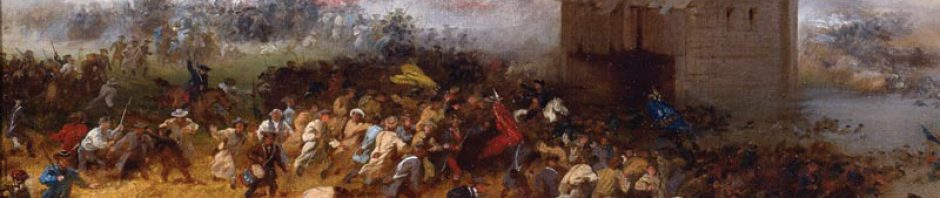
Posted in Maryland 400 | Tagged , , , , , , , , | 1 Comment

A History of Service

By May of 1776, 28 year old David Congleton enlisted as a private in the Fifth Company of the First Maryland Regiment, where he would serve during the Battle of Brooklyn. Following his initial one year service agreement, Congleton reenlisted for three years under Colonel John Hopkins Stone and Captain Nathaniel Ewing.[1] Continue reading

Posted in Biographies, Maryland 400 | Comments Off on A History of Service

Demographics in the First Maryland Regiment

Military service record of John Burgess

Military service record of John Burgess. John Burgess, Compiled Service Records of Soldiers Who Served in the American Army During the Revolutionary War, NARA M881, 0399, fold3.

A former member of the Fifth Company who fought at the Battle of Brooklyn, John Burgess was described as a slender, 42-year-old man, with light brown hair, a “swarthy” complexion, and a height of five feet eleven inches, who was born in England, according to his military service record from 1782. Burgess was not however, representative of the typical soldier of the Maryland Line.[1]

7th Independent Company Descriptive Roster

The 7th Independent Company’s descriptive roster. MARYLAND STATE PAPERS (Revolutionary Papers) Descriptions of men in Capt. F. Veazey’s Independent Comp. MdHR 19970-15-29/01 [MSA S997-15, 01/07/03/013]

One of the best demographic records from the First Maryland Regiment in the early stages of the Revolutionary War comes from a muster roll of Continue reading

Posted in Biographies, Maryland 400 | Tagged , , , , | Comments Off on Demographics in the First Maryland Regiment

So We Meet Again

During the Battle of Brooklyn, the First Maryland Regiment lost approximately one third of their total troop strength.[1] Casualties were substantially higher in the Third, Fourth, Sixth, Seventh Independent, and Ninth Companies who were forced to make a last stand at Old Stone House. Some of these companies lost over eighty percent of their men.[2] Continue reading

Posted in Biographies, Maryland 400 | Comments Off on So We Meet Again

Brothers in Arms

During the Revolutionary War, it was not uncommon for multiple men of the same immediate family to enlist. Some brothers, like Samuel and William McMillan, enlisted in the same company, while other sets of siblings dispersed and entered separate companies or regiments. The latter was the case with Robert, William, and John Bruce of Charles County.

All three brothers entered the army in the early stages of the Revolutionary War. Continue reading

Posted in Biographies | Tagged , , , | Comments Off on Brothers in Arms