Dear Finding the Maryland 400 Readers,
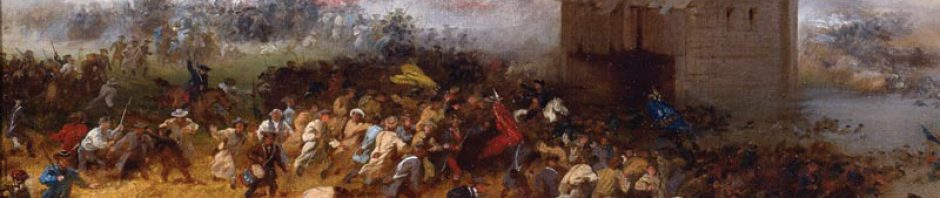
Today is the 247th anniversary of the Battle of Brooklyn, which seems like the right time to start posting again. It’s been a little while since we’ve posted anything. That doesn’t mean we haven’t been busy: a book is in the works featuring all the biographies of Maryland 400 soldiers and lots of other research about the Maryland Line. Right now, we’re going through the laborious process of editing all the text.
While that’s been going on, we’re still finding small pieces of new information about the First Maryland Regiment and its soldiers. Most of what we find are pretty minor changes. But we recently discovered the identity of a new Maryland 400 soldier, and one with an amazing story at that.
James O’Hara enlisted in the Fifth Company in January 1776. We didn’t know about him before because the company’s muster roll is torn, and only 36 soldiers are listed out of roughly 70 total. Through other sources, we’ve been able to locate about 10 others who fought at the Battle of Brooklyn. We learned about O’Hara from a letter a military doctor wrote on his behalf. O’Hara fell sick in 1776, ultimately losing his eyesight.
Unable to support himself, O’Hara turned to the government for assistance, which was not unusual among eighteenth-century Marylanders. There was no formal process for seeking financial relief from the state, so O’Hara sent letter after letter to the governor. What is unusual is the amount of support that he received. After almost every request, O’Hara was granted cash, food, or clothing from the military supplies.
Even more remarkably, in 1779, the General Assembly passed a resolution authorizing “the Governor and Council to grant such Relief to James O’Hara as they may think proper.” That arrangement seems to have been one of a kind–no other examples can be found of a veteran receiving such treatment.
O’Hara lived in Annapolis from late 1776, when he returned from his time in the army, until his death in the spring of 1785. He married and had two children during that time, and the family lived in housing arranged by the state or wealthy citizens of the city. How he was able to enlist so many advocates and supporters is a great mystery.
Maryland did not regularly grant pensions to Revolutionary veterans until the 1810s. Those pensions paid only paltry amounts, and the federal pensions that began in 1818 were little better. O’Hara and his family never received enough money to truly support them, but the state’s aid provided a vital lifeline, secured by his tireless efforts to ensure that his government did not forget him.
Watch for more posts about the Maryland 400 and Revolutionary Maryland in the near future! You can read O’Hara’s full biography here.
–Owen
You can help support Finding the Maryland 400. Make a donation to the Friends of the Maryland State Archives, and designate it for the Maryland 400!
Thank you for your support!


 Finding the Maryland 400
This is great news to know that more discoveries await us.
LikeLike